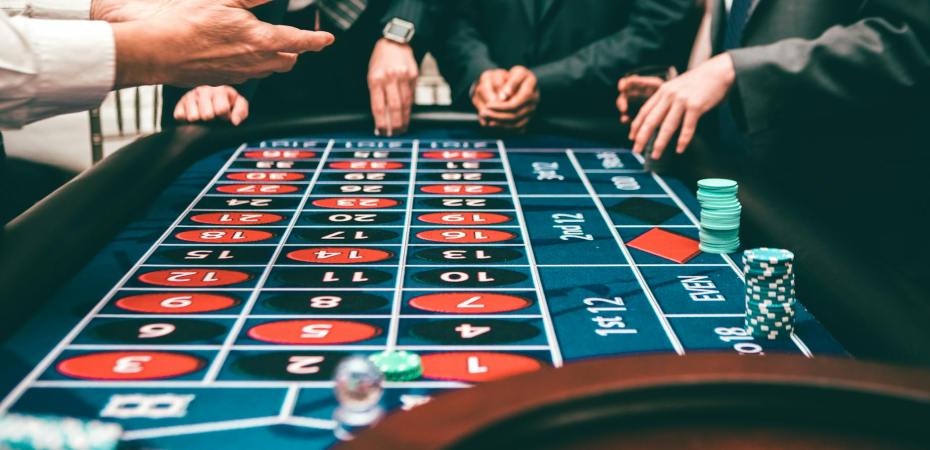
There seems to be a universal consensus that gambling is something people should be wary about. Through gambling, you can lose a lot of money in a short amount of time; you can also become addicted and lose money steadily; and by doing so, you may not only negatively affect your own well-being but also that of your spouse and kids and maybe even other people. To protect people from gambling, at least to some extent, most countries have a legal definition of gambling and additional legislation to regulate it. [Countries differ in how much they regulate gambling: some countries have very permissive gambling laws, others (like Austria) even make it a state monopoly so that no one can offer gambling services unless they have a (rarely given) special state license.]
My interest in this matter arose when a lawyer asked me to help him understand some statistical jargon that an expert witness was using in a court case. The court case centered around the question of whether a given online game was a “game of chance” as defined in the Austrian legal text. The definition of a “game of chance” in Austria is similar to that of many other countries. It says that a game of chance is (translated fairly literally by ChatGPT) “a game in which players are required to provide a consideration of monetary value and in which the decision on the outcome of the game depends solely or predominantly on chance.” In plain language, a game is a game of chance, according to Austrian law, if there is something of monetary value at stake and the outcome of the game is mostly driven by chance. And, at least in Austria, offering such “games of chance” as a business is not allowed (unless the business is run by the government).
I don’t find this definition of a “game of chance” very satisfying. Luckily, I have a game-theoretic definition of a “bad game” and in what follows I will try to persuade you that my definition is much better than the current definition of a “game of chance.”
One could probably be even more philosophical than I will be here, debating if there even is such a thing as chance. But I accept that chance is something we can meaningfully talk about. However, I would at least differentiate between three forms of chance (as the current literature on decision theory does).
There is risk (or objective uncertainty), which is the type of chance you encounter in casinos, where we (mostly) all agree about how to quantify chance by means of probabilities. Most of us would agree, for instance, that a ball thrown into an (officially checked to be fair) spinning roulette wheel has an even chance (of 1/37) of landing at any of the 37 numbered holes. Similarly, most of us would agree that the probability of drawing, say, the ace of hearts, from a properly shuffled deck of 52 cards is 1/52.
Then there is subjective uncertainty (or Knightian uncertainty, or ambiguity), which is such that we all agree about the possible outcomes, but do not necessarily all agree about their likelihoods. Think of a football (soccer) game, for instance. We all know that the final outcome is that either one team wins, or the other, or that there is a draw. But we don’t necessarily all have the same opinion about how likely a draw, say, is.
Finally, there is the type of uncertainty, where we don’t even all agree about the possibilities that could happen, let alone agree on how to attach probabilities to these possibilities. This uncertainty is often referred to as unawareness in decision theory, see Burkhard Schipper’s unawareness project.
If we are talking about chance, especially in a supposedly well-defined legal context, I would have liked to see these formal distinctions made and addressed. It matters, I feel. Compare the following two games, for instance: blackjack, for which most of us would agree that all chance is objective, and rock-paper-scissors, in which there is no actual device used to generate chance. Blackjack would fall under the legal definition of a “game of chance” if played for money. I am not so sure about rock-paper-scissors (if played for money). [You know the game: rock beats scissors, scissors beat paper, and paper beats rock; and these are your only three choices.] One could argue that there are only two components in this (and any) game that generate outcomes: chance (of which there is none in this game) and the players’ behavior. Now we know that the minimax recommendation for playing rock-paper-scissors (which is also its unique Nash equilibrium) is to play uniformly randomly, that is, to use each of the three strategies with a probability of 1/3 each. If that is what the players do, then there is chance in this game. But would the players play like this? At the very least, I would say that the game exhibits subjective uncertainty, and this uncertainty exclusively derives from the other player’s strategy. Austrian law is often interpreted as if the only factors that can determine the outcome of any game are chance and the players’ skill. But the only chance in rock-paper-scissors is that generated by the players, which in turn is determined by the players’ skill. A bit of a muddle, I find.
Now, consider tic-tac-toe. Most of us would probably agree that the game has absolutely no chance component. The game indeed has a (pretty simple) optimal strategy for both players and, if both play that, the game ends in a draw. But now suppose that an entrepreneur offers a platform that allows people to play tic-tac-toe for money (and the entrepreneur keeps a percentage share). Suppose, for the sake of the argument, that a range of people play this game for money on this platform, with some who understand the optimal strategies and some who do not. Then these games do not all necessarily end in a draw. I do not see, however, how this game could satisfy the legal definition of a game of chance, as it is hard to argue that there is any chance in this game at all. Just as there isn’t in chess (or checkers, or Connect Four). Yet, if these games are played for money and organized by an entrepreneur who keeps some of this money, to me this seems rather similar to playing blackjack in a casino (at least for some players).
There are games that are played for money (to an extent) that are not typically classified as “games of chance,” even though they satisfy the legal definition of a game of chance if we allow subjective uncertainty also to count as chance. Take any sport, really. Consider a football game or a game of golf, for instance. The existence of a betting market about these sports proves that there is “chance” at least in the eyes of (most of) the beholders. And there is indeed a chance component to these games, probably not only derived from the players’ strategies, but also from varying weather conditions and other factors (think of gusts of wind in golf, for instance). If we accept “chance” to also cover subjective uncertainty and if these games are offered with money at stake, then these games also qualify as “games of chance.” [Most sports have the feature that players’ “salaries” depend on their success; so, there is clearly some money at stake.]
In fact, sports betting and even financial (stock market) trading satisfy the legal definition of a game of chance. This is definitely so, if we allow that other people’s behavior, which is typically the only thing that determines the betting odds and the prices of financial assets, counts as “chance.” How much a bet or a financial asset pays out depends on more subjective uncertainty (about how the sporting event results or about how the price of the financial asset is revised over time, which in turn is determined by some people’s behavior). If we were to believe in the so-called efficient market hypothesis (which we probably should, at least to a high degree, see a previous post of mine), then the betting odds or the prices of assets accurately reflect all pertinent information that there is out there. This would make the uncertainty involved in sports betting and on the stock market almost objective. In fact, much of financial theory assumes that this is so. But then, nobody could really know more than all there is to know – nobody can be much better at betting or at financial investments than anyone who does not do silly things, so skill doesn’t really come into it. But then, sports betting as well as financial trading are games of chance according to the legal definition.
Apparently, neither sports betting nor financial trading is currently considered a game of chance in Austria. Offering such services seems to be allowed at the moment. Maybe this is the case because sports betting and financial trading have been classified (incorrectly, in my opinion) as games, in which the skill component is higher than the chance component.
There is a nice attempt to assess how much skill versus chance there is in games in a paper by Peter Duersch, Marco Lambrecht, and Joerg Oechssler, Measuring skill and chance in games, European Economic Review, Volume 127, 2020, 103472. The idea is simple: for whatever game you are interested in, consider or construct an (ELO) ranking of the players that play this game. Let me here suppose that we are dealing with a two-player game. Then, using data on game play, estimate the probabilities of one of the players winning the game as a function of the two players’ (ELO) rank. If a player with a low rank still has a decent probability of winning against a player with a high rank, then the game has a large chance component. I believe that if one were to extend this approach to sports betting and financial trading, one would find that there is mostly chance in both of these “games.”
In any case, this is not the direction I want to take here – although it would be interesting to have a look at. I would recommend a different definition, maybe not of a game of chance, but of a “bad game” that governments might want to regulate. My definition would be this: A game is “bad” if it is subzero-sum for the contestants. In other words, the total net payout to the players of this game is negative. No mention of chance is necessary. Nobody has to assess how much chance versus skill there is, either. All we would need to check is whether the total net payout to players is negative. Doing this is very easy.
Let me revisit the examples of games I used above to see whether they are “good” or “bad” games. Let’s begin with games in the casino: they are all “bad.” This is because the players put in money, and that money is collected and paid out again, with the casino keeping a percentage share. According to my definition, poker is just as bad as blackjack or roulette. Note, however, and this is important, if poker is played live on TV and many people watch this (and at least indirectly pay for this privilege by watching commercials), such that the total net payout to the poker players was positive, then this would be a “good” game. Most sports are “good” games like this. Sports competitions are performed for the benefit of spectators who pay to watch the event. The money this generates is (partially) used to pay the contestants’ wages or prizes. Similarly, there are two ways one could offer a platform for people playing rock-paper-scissors for money. If all that happens is that the platform makes this possible and takes a cut of winnings, then this is a “bad” game. If people are paying to watch this game, such that some added value is generated and redistributed to the players to make the game more than zero-sum, then this is a “good” game.
The definition of a bad vs. a good game is also great to differentiate sports betting and financial market trading. Sports betting is typically offered by a broker who simply keeps a cut of the money that is placed as bets before paying out the rest. So, the game is subzero-sum and “bad”. Financial assets typically grow in value over time, that is, they have a positive return on average. The game of financial trading is super-zero-sum and thus “good”.
Now, you could still have qualms even about “good” games. In “good” games, people could also lose a lot of money, even though, on average, net winnings are positive. If lawmakers worry about this, they could add limits to how much you can bet or trade. One should, however, probably have different limits depending on the perceived risks of financial assets (one could lose much more trading options than trading stocks, for instance). Indeed, this is what the Basel framework does for banks (adopted in most countries): banks are required to hold adequate capital to cover their risk exposure; the minimum capital requirement depends on the risk of the bank’s portfolio of asset holdings. Something like this could also be imposed on private financial traders if one is worried about them losing too much even in “good” games.
Anyway, I feel my definition of a “bad game”, games that are subzero-sum, would be a much better basis for gambling law than the hard to assess current legal definition of a “game of chance.”
 The Game Theory of Everyday Life