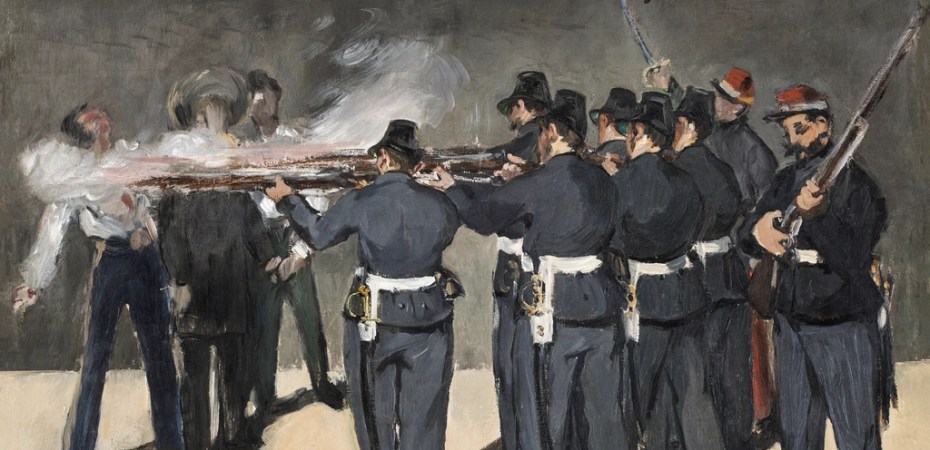
I once read somewhere something that Frederik the 2nd of Prussia, the “Great,” said to a general of his army. They were standing on a balcony overlooking the Prussian army and Frederik said something like “Isn’t it curious that we control them and not that they control us?” If you think about it, it does seem quite amazing. Thousands of people all do what one person wants them to do. And this, typically, not because all these thousands of people unanimously agree with their king’s commands. In many cases, one would imagine, many of these soldiers would personally rather not follow orders. Imagine going into battle, for instance, one of the purposes of having an army one would guess. Battles have a tendency to get people killed, often many people. It seems unlikely that many soldiers feel that it is in their personal interests to undertake an adventure that involves such a high probability of dying. Yet, they often do so. In this post, I try to explain with a bit of game theory, how one person can make a large number of people do what perhaps almost none of them want to do.
Before I do so, let me first admit that soldiers don’t always follow orders. In fact, the very same Frederik the 2nd of Prussia, as many other kings and generals through history struggled with the problem of desertion. This is evident from his detailed instructions (in Chapter 1 of https://friedrich.uni-trier.de/de/volz/6/text/) on how to prevent desertion. Generally, there are many strategies commanders of large armies use to forge and maintain a large fighting army. For instance, they aim to be charismatic and try to convince their army that they are fighting for a great cause, also potentially interesting topics for a game theoretic analysis. But here I want to focus on one, clearly always used, strategic device to maintain an army: the fear of punishment.
As one of the soldiers in the army, you follow orders even if you don’t like to, because if you don’t, something even worse happens to you. Your choice is typically not between going into battle or staying at home doing things you enjoy, but of going into battle or being jailed or even executed as a deserter or traitor. Given these limited choices, you “prefer” going into battle. But how is this punishment affected? Only through another command by the king that is followed by those whom he commands. What if they do not obey? Well, they then also face serious punishment, ordered by the king and executed by another set of soldiers. If they in turn also do not obey, another group of soldiers will be ordered to punish them. Often in such situations, it is unclear as to how many people are really behind the king, but some, a special guard with special privileges, for instance, may well be. There are many ways one could now model this situation as a game. I will here consider the perhaps simplest such game of interest, a large simultaneous move game with complete information. Both of these assumptions could and should be challenged, and, perhaps, we get there later.
The king’s strategy is simply to issue commands and then command some of the people to punish any who do not obey his commands. Let us fix his strategy, thus. Let us then look at the strategies of the soldiers, when, for instance, they are told to go and fight in a battle. To simplify, they can either obey or not obey. We have players, the soldiers, and their strategies in the game. Now we need the payoffs, as game theorists like to call them. First, we need to consider the various possible outcomes that can emerge in this game. Let us suppose that, as long as there are only a few soldiers who disobey, they simply get punished and the king’s wishes are executed regardless of some dissent. But suppose also that there is some threshold of the number of dissenting soldiers that when it is exceeded the king has no choice but to change his policy (not going into battle in the example we have used here). Let us call this magic threshold number k, and let us suppose for the moment that all involved know the value of this number.
We now need to specify how the soldiers like any such outcome that could arise. Let us consider two types of soldiers, one who is with the king and is happy to do what the king commands, and one who is not. A soldier who is not happy with the king’s commands might see the situation as follows. If they go into battle, they are pretty unhappy, say they get a payoff of -1. If they dissent and get punished and the army goes to war anyway, then they are even more unhappy and get a payoff of -c < -1. If there are so many dissenters that the army does not go into battle and there are no punishments, then they are happy and get a payoff of 1, say.
What about a soldier who likes to do what the king commands? Well, we could for instance, specify that such a soldier has a payoff of 1 when they go into battle, has a payoff of -1 if they don’t, and has a payoff of -c < -1 if he or she is punished (for some reason). Let us call the two types of soldiers “disloyal” and “loyal,” even though these are probably not the best terms. Their payoffs can then be summarized in the following two tables.
| A loyal soldier | less than k-1 others dissent | k-1 others dissent | k or more others dissent |
| obey | 1 | 1 | -1 |
| disobey | -c | -1 | -1 |
| A disloyal soldier | less than k-1 others dissent | k-1 others dissent | k or more others dissent |
| obey | -1 | -1 | 1 |
| disobey | -c | 1 | 1 |
A loyal soldier has a simple choice. For them obeying “weakly dominates” disobeying, as game theorists like to say. In the table, this can be seen by the fact that all numbers in the obey row are at least as high as the corresponding number in the disobey row. A loyal soldier will then just obey.
A disloyal soldier, however, has a more complex choice problem. They would prefer to disobey when k-1 others disobey also, thereby becoming the key additional dissenter that brings about the revolution. They are indifferent between obeying and disobeying when more than k others dissent, as then there is a revolution regardless of what they themselves do. But when less than k-1 others dissent, they “prefer” to obey, as obeying will not change the fact that they go to battle, and will only lead to them being punished for nothing, so to speak.
Call the proportion of disloyal soldiers p, some number between 0 and 1. Suppose for the moment that this proportion is commonly known: everyone knows it and everyone knows that everyone knows it and so on, ad infinitum, as game theorists somewhat pompously like to say. Suppose for the moment that p < k/n. This means that even if all disloyal soldiers were to dissent, it would not affect what happens, except that they get punished. In such a situation, the game has only one (Nash) equilibrium. A Nash equilibrium is a strategy combination (for everyone involved) such that when everyone behaves according to it, everyone prefers to do so: any one person alone would not find it in their interest to change their strategy. The unique equilibrium in this game would then be for everyone to obey. All loyal soldiers will obey, and then any disloyal soldier only has the choice to obey and get a payoff of -1 or to disobey without affecting anything and get a payoff of -c < -1.
But now what if the proportion of disloyal soldiers p is higher than k/n? Let us imagine that, at some point in the past, p was lower than k/n – there were mostly loyal soldiers – but over time their number has decreased, perhaps because the king’s commands have become more and more outrageous. The game then has two Nash equilibria, one in which the disloyal soldiers successfully dissent and change has been affected, but also another in which everyone still obeys. Why do they all obey? The problem is, that if all others obey, any individual disloyal soldier is still only faced with the choice of obeying and getting a payoff of -1, and dissenting and being punished for it, getting a payoff of -c < -1, because he or she would be the only one dissenting. I would argue that, under the circumstances, the obeying equilibrium is focal in the sense of Thomas Schelling. After all, that is what everyone did in the past. But note that even if all soldiers are disloyal, that is p=1, and even if this is commonly known, everyone obeying is still an equilibrium.
Before I consider how the soldiers might get out of this, for them very unfavorable, equilibrium, let me think a bit about what would happen if some of the key variables in this game were not common knowledge. In many real-life situations neither the number of dissenting people required to trigger a change nor the proportion of disloyal people are fully known to everyone. But this typically doesn’t change anything: if anything it might make the focal equilibrium of everyone obeying even more plausible. There is an interesting literature on this; as a start I would read this Wikipedia entry on global games and the articles mentioned there.
So how can the disloyal soldiers get out of this, for them bad, equilibrium? It requires a revolution: soldiers have to communicate with each other; find out if others are also unhappy with the regime; and, once they have organized a sufficiently high proportion of potential dissenters (more than k/n), they collectively disobey. This coordinated action will then have the desired effect of implementing the change that the disloyal soldiers desired. Organizing this coordinated disobedience has many risks for the soldiers involved. One would, for instance, imagine that if they happen to talk to the wrong type of soldier, especially fairly early on in their undertaking, they would be caught and prosecuted. Moreover, if the required proportion or number of dissenters for a successful regime change is uncertain, then they face the risk that their coordinated disobedience does not bring about this change, but instead leads to mass incarceration, executions, or whatever other forms of punishment the king could implement.
I believe that most leaders, such as the king in the running example, are paranoid about the possibility of such a revolution and will do their utmost to prevent this from happening. Apart from cracking down rapidly and violently on even the smallest sign of dissent, they will also try to make communication difficult. If I remember correctly, in the Austrian Biedermeier time police were told to break up any public meeting of three or more people. Nowadays, leaders will try to block social media channels. Such policies have two effects: 1) they make it harder for the subjects to learn how many others are also unhappy with the regime, and 2) they make it harder for subjects to coordinate their activities.
I have already gradually strayed a bit, in the last paragraph, from my example of a king or general controlling their army to an autocratic regime that governs and controls its populace. I have done this for good reason, however, as the same arguments apply to many settings that involve one executive person making decisions for a group of people, be they large or small.
Consider, as another example, a modern autocratic leader of a country, who is surrounded by a group of government and army officials who are there to advise as well as to execute policy decisions. Suppose that the autocratic leader has a meeting with a group of these officials, in which the leader suggests a new policy measure and asks the councilors for advice, feedback, and constructive criticism. Will the leader get that? Well, it all depends on whether the councilors believe that the leader is truly interested in their opinion or that he just wants to hear them consent. If the leader is commonly known to be after consent, the same mechanism as described above will make sure that the leader gets consent. I was once told by a person I trust on these matters, but I didn’t check this myself, about an interview with Nikita Khrushchev, sometime after he had taken over the running of the Soviet Union from Joseph Stalin. He was, supposedly, asked why he hadn’t suggested some of his marvelous new policies already when he was one of Stalin’s advisors. Khrushchev’s answer was “WHO ASKED THAT?” in a loud voice, as I was trying to indicate with the capital letters. After that – silence – until Khrushchev continued in a quieter voice “That’s why!” Presumably, the same forces I described above were at work when Khrushchev and Stalin’s other advisors were “discussing” matters of state with Stalin.
I want to finish this post with a perhaps even more sobering example (that I have also written about in an earlier bog post). Imagine a fairly democratic setting, in which members of an academic department, a sports club, or some other somewhat organized group of people elect a short-term executive decision-maker who, at least for a while, is in charge of the running of the group. Suppose that among the executive decision-maker’s many duties is also the distribution of funding to the various pet projects the members may have. Suppose, furthermore, that the vote is between an incumbent who used to be liked by many, but whose (hidden) support has recently dwindled, and a challenger who most prefer to the incumbent. Suppose that, while it is the case that a majority would prefer the challenger, this fact is not common knowledge among the members. Now first, the good news. If we have a true and honest election, perhaps even with a secret ballot, then a simple majority voting system would allow us to detect what the majority wants. Everyone votes for their favorite candidate and the candidate with the true majority support wins. But now suppose that there is just one small change to the voting system. Votes are not secret but identified through a simple raising of hands. Perhaps the “constitution” that governs the voting procedure – the university bylaws or the club’s statutes – is not that clear on that point; or perhaps the vote used to be cast in secret, but doing so is a bit tedious, and at one point you were all friends and on the same side and someone suggested that you could cut short this somewhat tedious process. In any case, that’s where you are. And now even this democratic voting procedure can lead to the incumbent winning the election even if not a single person (other than the incumbent one would presume) is in favor. The incumbent can achieve this by the simple device of explicitly or implicitly threatening anyone who does not vote for them by removal of funding for their pet project or by instituting some other measure that personally harms the “defector.” Even if these punishments are not Draconian, the voting game has an, and this is possibly the focal, equilibrium in which everyone votes for the incumbent for fear of being the only one voting against them and then being (even if just slightly) punished for their “dissent” without having in any way changed the outcome of the election.
Suppose you would like to go back to having a secret vote to avoid this bad result from happening. Will you raise this point? Will you put in a motion to discuss a small change in voting procedure? Not if you feel that even this act will already open you up for possible punishment. Once political institutions have eroded even ever so slightly away from being perfectly democratic, and it is not clear what that would really be, they are not easily reinstituted and the more paranoid and the more subject to handing out punishments the leader becomes should he or she no longer be “elected” to rule the harder it will be to reverse this slippery slope of democratic decay.
 The Game Theory of Everyday Life
Hi Christoph!
This is a very compelling example you consider! I think there is one more curious thing going on in this simple setup: as you mention, for a loyal soldier “obey” only weakly dominates “disobey”, so if we are in the sate of the world where more than k soldiers dissent, the loyal soldier is indifferent between obeying or disobeying. This means (correct me if I am wrong), that when there are many soldiers dissenting, some of the loyal soldiers might also rationally choose to disobey! I find it curious that even loyal soldiers are not immune to disobeying when sufficiently many others dissent.
LikeLike
Hi Valeriia,
yes, you are quite right. I guess one could even imagine, in a competition between two regimes A and B, that once regime B is adopted it might be sustained through the threat of sanctions just as much as A was.
LikeLike