-
The tragedy of the common beaches

There are things you want to do only with lots of other people. Go see a football game, for instance, or a pop concert. You would feel rather silly being the only one clapping and cheering. You might also prefer not to be the only couple in a restaurant. Aside from the growing feeling that you are probably in the wrong place, you miss the background chatter, the gentle clashing of dishes, the constant moving around of busy waiters. You would miss atmosphere.
But the beach, for me at least, could do with fewer people. In fact, I would almost go as far as saying that I would prefer to be the only person on a beach, except family and friends of course. To be fair, the Cornish beaches that I have been on in the last couple of weeks are typically not too crowded, and if there weren’t a significant number of beach goers, the beach wouldn’t have a café and bathrooms. And I do appreciate being able to buy an ice-cream cone now and then.
But there is also a beach not far from the others that we essentially never go to. In the last almost ten summers, in which I have spent parts of the summer in Cornwall, I have been to this beach only once. And this is actually probably the nicest beach of all. It has islands and caves and multiple bays. The tide does interesting things to the beach. It has lovely walks around the cliffs. It is simply amazing. But it is just always full of people. Being there once, I realized that I much prefer to go to a less attractive beach with fewer people over the more attractive beach with lots of people.
I expect that I am not the only person on the beach wishing others away and that beaches generally suffer from what is known as “the tragedy of the commons”. Beaches in Cornwall are “commons” – see also my post on a conflict over access to stream water on a Cornish beach. They are not owned by any individual or group but are owned by all. By the way, I am very happy about this. I remember once being at a conference at Stony Brook, New York, where I spent a free late afternoon driving around to find some access to the coast. As a naïve European I thought I could just drive around and find a sign pointing me to a beach somewhere. In fact I drove around for hours without ever getting close to the coast at all. I always ran into private property, or at least signs indicating as much. And I suppose that if I had found a publicly accessible beach it would have been packed. So I do appreciate the fact (I believe) that in most of Europe (including the UK) most beaches are “commons”.
But the problem with commons, or at least a possible problem, is that they are overused, just as is supposedly the case with the overfishing of international waters and, historically, with the overgrazing of the commonly owned village meadow.
The problem is this. When a new person arrives on the beach, while this person is apparently – by a revealed preference argument – deriving some positive benefit from being on the beach, the well-being of the people already on the beach often deteriorates. The typical Cornish beach is wind-swept and prone to the occasional shower. People, therefore, bring wind-breakers and even tents to the beach. Imagine your joy when a family of four tents puts up camp a few yards from your feet right between you and your view of the sea. Or when you go bodyboarding in the surf, trying to stay within the very narrow bounds allowed to you by the life-guards, you continuously bump into all those other surfers or, worse, they into you.
If this problem is severe, one could imagine welfare improving prices that people have to pay for going to the beach. Note that through parking fees such prices are actually sometimes already in place. It is indeed possible in some cases – even if it sounds a bit paradoxically – that charging a perhaps even substantial price for beach access would be welfare improving for all potential beach goers. The reader may want to try and construct a model (a set of assumptions and a logical argument) in which this statement is true. I will do this in my next blog post.
I would like to finish this post by pointing out that this “tragedy of the commons” is probably present in many other situations. The last time I went to the Natural History Museum in London with my kids, it was so packed with people that we did not really enjoy ourselves much and left again pretty quickly. When I was in Kyoto (on a two-month sabbatical) we mostly avoided visiting the “top temples” because they were so busy that we felt the whole point of visiting a calm and serene temple garden was lost. Yes, all these places do charge entry prices, but I am not convinced that these prices are welfare-optimizing for the “consumers” of these places. Generally, any place you visit with potentially lots of other people with which you compete over access rights in some form or another – a children’s play ground, an amusement park, a museum, etc. – potentially suffers from a bit of “the tragedy of the commons”.
-
Allocating stream water

It could easily have ended in a fist fight. Or more likely a plastic shovel fight. This is how it began. My kids, my wife, and I went down to a Cornish beach. A beach with an interesting feature. There is a small stream that runs high up the beach parallel to the sea for more or less the whole length of the beach. Kids find this stream almost more fun to play in than the often pretty rough sea, which is mostly inhabited by bodyboarders smashing into each other. As the stream runs essentially over and through sand with lots of stones around as well, it is very malleable. Kids (and, invariably, their fathers – mothers do not seem so keen) love to build little dams, dig up new channels, and create little pools to play in. On the given day, easily 20 to 30 kids (and some of their fathers) were happily engaged this way somewhere along the length of the stream, when suddenly the water was reduced to a tiny trickle and had stopped flowing altogether further down the stream.
An investigation was launched that quickly revealed the source of the sudden disappearance of water. One of the more ambitious projects, not only involving a father but a set of uncles as well, had been successfully carried out further upstream. The stream had been dammed so well, that the water had now found a new course much more directly into the sea, avoiding the long meandering now empty river bed. It was a project that was every father’s dream, of course, and I could see and empathize with the sense of satisfaction on all the faces. Careful planning and tireless construction work with attention to detail had led to a substantial change in our surroundings. Men (and their children) have changed nature to suit their own needs.
Yet, glorious as it undoubtedly was, the successful engineering feat had left the 20 or 30 kids downstream with nothing to play with anymore. The dam builders were approached and asked to open one of their hatches at least a little to let some water to also flow down the usual path. Reluctantly they did so. Not much later, however, the water supply downstream dwindled again. The opened hatch had been closed. This now led to subversive acts of sabotage with people opening hatches without asking for permission or explaining why they did so. This in turn left the original engineers with frequent repair work. One had a sense that the engineers knew that they were on morally shaky ground, but they tried to hang on regardless to see their project through. People were trying to avoid an open confrontation and after a couple of hours of oscillating water levels on both sides the problem was solved by the engineers finally deciding to join the bodyboarders in the sea. As by now some kids had started working down the new (but much shorter) stream, eventually some water was allowed to flow both ways.
The problem of allocating water to the different parts of the stream was certainly inefficient for some time. In that time most of the water flowed down the short new river bed that only allowed a few kids to play in it, while when the stream was flowing down the old river bed it had created happiness for many more children. The, for the most part silent, dispute over the allocation of water, was created by the absence of a clear property rights structure. The beach is a “commons ‘’. It is not owned by any one person but by all of them. Nobody has a right to an exclusive use of the stream or to decide alone on how the stream should be used. If someone owned the beach or at least the stream (this could be a government agency or a private person) beach goers could pay for any amount of water (subject to availability) going down to their desired branch with some reasonable hope that prices will solve the allocation problem. I would not really advocate this here for two reasons. One, as the issues at stake are not that very high, people in most cases find reasonable agreements through communication with the implicit threat of public shaming if people act too selfishly. And then they are better off compared to a situation with the same final allocation but with everyone having to pay. Two, it wouldn’t be nearly as much fun to watch.
-
Penalty taking: some game theory and hypothesis testing
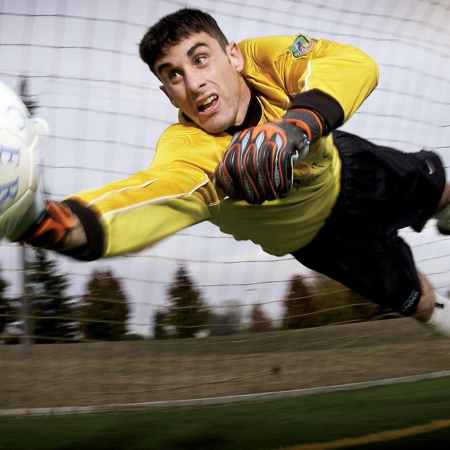
One of my colleagues sent me an article in the Financial Times from March 17, 2017 entitled “How to save a penalty: the truth about football’s toughest shot. On star goalie Diego Alves, game theory and the science of the spot kick.” I found the article interesting for two reasons.
- It has a fun discussion of the psychology and game theory of taking penalty kicks. It points to the paper by Ignacio Palacios-Huerta in which he shows that professional soccer players take penalties in a way that is consistent with Nash equilibrium (or minmax) behavior. The FT article also includes an interesting interview with Ignacio Palacios-Huerta and his “analysis of ideal penalty-taking strategies for the then Chelsea manager Avram Grant before the Champions League final against Manchester United in 2008.”
- The FT article highlights Diego Alves, Valencia’s goalkeeper, and argues that he is particularly good at stopping penalties. The FT article argues that Diego Alves’ stopping record (he stopped 22 of 46 penalties – a very high number compared to the average stopping rate of 25% of all goalkeepers combined) cannot be explained by chance alone.
In this blog post I want to comment on the 2nd point. It is actually wrong. And it is wrong for an interesting reason. Moreover the mistake made is very easy to make and is a very common one.
So how does the analysis in the FT work? We are interested in testing the null hypothesis that Diego Alves’ true stopping probability is (at most) 25%. If this null hypothesis is true the probability of observing Diego Alves stopping 22 (or more) shots out of 46 is given by the binomial formula and can be calculated to be 0.0676%. Statistically minded readers will know this as the p-value (associated with the given one-sided null hypothesis).
As this probability is very small (much smaller than the commonly used 5% cut-off), the FT article then claims that the null hypothesis must be wrong and that Diego Alves really has a true stopping rate that is higher than 25%.
But this is not necessarily so. So what is wrong? In this analysis we forget that it was no accident that we chose to look at Diego Alves. Why did the FT look at Alves? I guess the only reason for this choice is that he has made an unusually high proportion of stops. So if Diego Alves had not made such a high number of stops, but someone else had we would have looked at this someone else. In other words the FT article is not about Diego Alves, it is about the goalkeeper with the highest proportion of stops. This person just so happens to be Diego Alves.
So what does this mean? It means that we have to take into account that we are looking at the highest empirical stopping rate of about 400 goalkeepers. The FT has a nice graph looking at penalties faced (on the x-axis) and penalties stopped (on the y-axis) for many goalkeepers from the top leagues. I roughly counted (estimated) that this graph has about 400 dots (i.e. 400 goalkeepers).
Now I am going to make a mistake myself. I am now going to make the empirically clearly wrong assumption that all of these 400 goalkeepers have faced exactly 46 shots. I do this, so I can make my point fairly simply and quickly. If I had the full data I could do this correctly. But I think it is sufficient for the point I want to make.
Suppose therefore that we have 400 goalkeepers who each have faced 46 shots. What is then the likelihood that the best of them has stopped 22 (or more) of these 46 shots if the true stopping rate is 25%? This can be calculated as 1 minus the probability that all of them make less than 22 stops. This is given by 1-(1-0.000676)^400. This probability is 23,7131%.
To summarize, if the true stopping rate of all goalkeepers is 25% and if all 400 goalkeepers face 46 penalty shots, then the probability that the best of them stops 22 or more of these 46 penalties is 23,71%. That is not sufficiently improbable (it is for instance higher than the usual 5% cut-off) to make me abandon the null hypothesis that all goalkeepers (including Diego Alves) have the same 25% stopping rate. In other words, I do not believe that there is anything particularly special about Diega Alves’ penalty kick stopping ability. We could do another test after he has faced another 46 penalties. I doubt he will save another 22 of these.
-
Three Thoughts on Free Trade

The Wachau is a roughly 40km long and narrow part of the Danube valley in Austria. It produces and sells essentially only three things: beauty, wine, and apricots. With “producing and selling beauty” I mean that it tries to and manages to attract tourists. Its wine-growing and trading goes back a long way.
Except for perhaps in pre-historic times, it seems that the Wachau was never autarkic, meaning there was always trade (and probably also migration) between the Wachau and the world around it.
Now suppose, counter-factually, that the Wachau were and had always been completely cut-off from the world. What would the Wachau be like?
(more…) -
Resolving a family conflict

I was recently able to help family friends, a father and daughter, with a little family conflict using a bit of microeconomics. The problem was this. The daughter, let’s call her Marianne (not her real name) needed dental work. Her Austrian dentist was fully prepared to fix Marianne’s dental problem for a fee in the neighborhood of € 1000. Marianne’s father, let’s call him Franz (not his real name), tends to go to a dentist in a neighboring country and is very happy with his service there. He ascertained that his dentist would charge something in the neighborhood of € 100 for the same dental work. Marianne is a 20 year old student and still relies on her father to pay things such as dental bills for her. When I met them recently they were arguing over which dentist she should go to. In what follows I will explain their positions, and how a little bit of microeconomics helped with the resolution of this conflict, why it worked, and when it would not necessarily work.
(more…) -
The Dinner Gong and the Value of Common Knowledge

There is a period of time each summer when many members of my wife’s fairly large family all come together in one large house. People take turns (to some degree) cooking dinner. In this post I describe what happens when dinner is ready and try to explain it using a bit of game theory.
You need to know some facts and some rules. First, dinner is not always ready at exactly the same time. In fact the time when dinner is ready is a random variable. Some of the family members may know more or less about this random “dinner is ready” time, but as you will see this is not so important. Second, dinner (that is eating) can of course only begin when everyone is present at the dinner table. Third, while everyone prefers to have dinner to not having dinner, most prefer to keep doing what they were just doing over waiting at the dinner table.
The problem we are therefore facing every evening is one of coordination. As long as at least one person other than me is not yet at the dinner table, I prefer not to be at the dinner table myself. If everyone else is at the dinner table, I also want to be at the dinner table. This is true for everyone in the family.
The problem of coordination, especially given the random nature of the “dinner is ready” time, requires communication. What would happen if we had no communication at all? I suppose in this case, strong pressure would be placed on whomever is cooking to have the food ready at, say, 8pm sharp, and everyone would aim to be at the dinner table at 8pm sharp. Social sanctions, such as sarcastic remarks about some people not being able to keep time or watches apparently not working properly, would be put in place to ensure that the arrival time at the dinner table does not gradually slide to sometime after 8pm with the effect that the food would get cold. Occasionally, dinner not being quite ready by 8pm, this would lead to inefficient waiting by all concerned.
But this is not our problem as we DO have communication. In the past few summers we have tried two forms of communication. The first is achieved by whoever is doing the cooking telling someone that dinner is ready and telling them to tell others and so on. The second, and I will explain why this is different in a few ways, is by means of sounding a dinner gong that can be heard easily in all parts of the house.
So, what happens when the house houses many people and we use the first communication protocol? So, imagine that dinner is ready and that whoever is doing the cooking informs the first person they see about this fact and also tells them to spread the word. Then after some time a few people start appearing at the dinner table. They then start asking each other: “Does so-and-so know?” When the others state that they “do not know whether so-and-so knows” one of them will then head off to try and tell so-and-so that dinner is ready. Then someone else decides that “given that not everybody seems to yet know, they still have a bit of time to quickly finish what they were doing before they came down just now”. After a while another person arrives at the doorstep of the dining room and, upon taking in the information that some people are missing (maybe the room is even empty), immediately goes off again with the goal to find them to tell them that dinner is ready.
In more game theoretic terms, the problem with this first form of communication is that, while it may fairly quickly lead to everyone knowing that dinner is ready, it does typically not very quickly lead to everyone knowing that everyone knows that dinner is ready. In fact even when it is actually the case that everyone knows that everyone knows that dinner is ready, there may still be people running about the house trying to find others. Why? For instance it could be that Person A knows that Person B knows that dinner is ready, but Person A is not sure that Person B knows that Person C also knows that dinner is ready, and if Person B does not know that Person C also knows that dinner is ready (Person C is perhaps already at the dinner table) Person A might be going through the house trying to find Person B to inform her that Person C already knows that dinner is ready and that Person B can stop trying to find Person C, while in fact Person B knows that Person C knows that dinner is ready and Person B “will be down in a sec”. You have to read this sentence very slowly many times, perhaps drawing a diagram. It may sound very convoluted, but I assure you that I have experienced this many times.
The dinner gong solves all this. The dinner gong, a distinct sound that can be heard loud and clear in every corner of the large house, is perhaps a little bit faster in making everybody know that dinner is ready, but more importantly it makes everyone know that everyone knows that dinner is ready and makes everyone know that everyone knows that everyone knows that dinner is ready, and so on ad infinitum (as game theorists like to say). In short, it achieves that the event that the dinner is now ready is common knowledge among all of the many family members and with this reassuring certainty we all come running down to dinner in next to no time.
-
Equilibrium Driving on Cornish Lanes
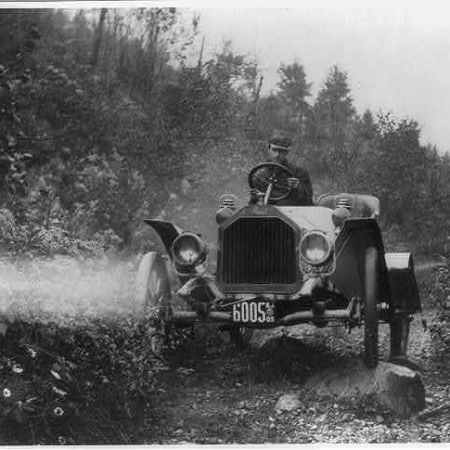
This is about driving on Cornish lanes (small roads in Cornwall, UK). I offer two things in this post: informed casual observations (in place of rigorous data collection) about how people navigate these lanes and a bit of game theory to explain my casual observations.
There are some things you need to know about Cornish lanes before we proceed. Cornish lanes have probably not changed since early medieval times, except that they are now tarmacked. Cornish lanes can be driven in both directions but they are too narrow for two cars to pass each other. Cornish lanes are bounded by tall and overgrown stone “hedges” on both sides. Cornish lanes are windy (not as in windswept), they meander. Cornish lanes have one final redeeming virtue (apart from being very pretty): there are occasional widenings, places in which two cars can pass each other. To be fair, there is always some widening within about a hundred yards (a yard is a bit less than a meter – we are in the UK, not in Europe) from any point along the lane.
Now to my observations. When the lane is narrow, as they mostly are, driving on the left is observationally indistinguishable from driving on the right. Yet, I think it is safe to say that whenever a road is wide enough to allow the distinction, people adhere to the general equilibrium behavior and tend to drive on the left side of the lane. More importantly whenever two cars meet they will in almost all cases try to pass each other hugging their respective left side of the lane.
Invariably, however, when two cars meet, they do so in a part of the lane that is too narrow for them to pass each other. This is due to the limited forward visibility that overgrown stone hedges allow on the meandering Cornish lanes. Now the game is afoot. We have two players, the drivers of the two cars facing each other in a place where they cannot get past each other. Ignoring the fact that time could play a factor in this game (after all, in any model, we have to sacrifice something of the full complexity of the real life problem in order to provide some basic key insights into the problem) the two players have essentially only two strategies: they can simply not move or alternatively they can back up to the nearest widening of the lane (which as I said before, is never too far away). I now turn to the payoffs in the game. I think it is safe to assume that essentially every driver would prefer not to move over backing up. It is probably also safe to assume that every driver would prefer to back up if the opponent does not (to enable her to eventually get to her destination). I agree that, as I will ignore time as a factor in this game, I am ignoring potentially interesting and amusing waiting games (or so called games of attrition). While these could theoretically happen, I have actually not encountered any in my, admittedly limited, experiences here. This further justifies my omitting time from the model I describe here. According to the model I thus described here the two drivers are facing a game of anti-coordination as the game theory literature would have it called. This game has three equilibria. One in which both players randomize with a high likelihood of getting stuck forever. This is empirically implausible, so don’t worry if you do not understand what I mean. The other two are such that one driver waits while the other backs up. This is invariably what happens. However, the interesting thing I want to address here is how it is determined who of the two drivers should do the backing up.
In what follows I describe my observations regarding the behavior of locals when they face such a situation (and they do so many times every time they drive). First, a local will try and establish what type of “opponent” (if I may call them that) she or he faces. By looking at and analyzing a variety of “signals” a local would first try to identify whether her opponent is a local or not, also taking into account the season. In the summer there are many more tourists than at other times of the year. Perhaps the most important among the signals (or signal generating processes, one should probably say, if one wanted to be a careful game theorist) the locals look at are the license plate and the general state of the opponent’s car. A foreign license plate is a fairly precise signal that the opponent is not local. There also seems to be something in the British license plate lettering and numbering system that, although a mystery to me, allows locals to identify (with lower precision) a Londoner or Northerner or generally somebody not from the area. If the opponent car is expensive and shiny, then it is also unlikely that its driver is local. Most local cars have scratches along their left side as the frequently hug the hedges almost a tad too closely. In fact locals often remark on the tourists’ apparent reluctance to drive their cars close to the hedges. Other signals include the speed of the oncoming car, both too fast and too slow are indications of non-locals, and how far the opponent car is from the hedge on their left side (see above).
If a local attaches a high likelihood that their opponent is non-local (and all this is done before the cars have even come to a standstill) then they immediately put the car in reverse and back up to however far back they have to go. This is due to their belief (tested just sufficiently often) that non-locals are simply not good at backing up and take ages doing so.
If a local, however, attaches a high likelihood that their opponent is also local, then the game, which to the game theorist is a game that is ex-ante a game of incomplete information, now essentially becomes a game of complete information. If you are not a game theorist, ignore this last sentence. What I mean is this, we are now in a situation where both drivers are pretty certain that they are facing a local. Locals, as they both know, know exactly where all the widenings of the lane are. Almost invariably now, I find, that it is the person who has the easier backing up to do (e.g. the person who has less far to go back to the next widening) who does the backing up.
Locals, thus, manage to solve this complicated anti-coordination game in the most efficient way. They are all happy to follow this societal norm of behavior for two reasons. First, it is an equilibrium and if any driver decided to do something different it would only cause her or him more delays. Second, this norm is such that on the whole every driver would have to back up in approximately half of all such situations. This is because any given driver would find herself in the “better” position of being further away from the next widening in the lane than her opponent in approximately half of all such situations.
What two non-locals do I do not know.
-
A hypothesis test in P.G. Wodehouse’s 1934 “Right Ho, Jeeves”

Reading on (you may want to read my previous post before this one), I found another beautiful example of hypothesis testing in literature with a pretty clear p-value calculation. I am now reading P. G. Wodehouse’s “Right Ho, Jeeves”, first published in 1934 I believe.
Without further preamble I shall briefly sketch the situation in the plot prior to the hypothesis testing bit. Bertram “Bertie” Wooster has just had a long conversation with Madeline Bassett to “pave the way” for Augustus “Gussie” Fink-Nottle to propose to her. During Bertie’s interchange with Madeline he learns that she is actually in love with Gussie already. When he then leaves her just as Gussie appears on the scene and leaves the stage to him, Bertie is convinced that “[a]s regards these two, everything was beyond a question absolutely in order” and that as he “legged it back to the house, the happy ending must have begun to function.” This establishes the null hypothesis: Gussie has proposed to Madeline and that his proposal had been accepted. This is the theory with which Bertie faces the evidence as it later presents itself to him.
(more…) -
A hypothesis test in A A Milne’s 1922 “The red house mystery”

I am doing some summer reading and just came across a nice literary example of one of the key methodological approaches in science: hypothesis testing.
What do we do when we perform a hypothesis test? We form a theory and call it our null hypothesis. We then look at data and ask ourselves how probable it is that we would see this data (or something like it) if the null hypothesis were true. This probability is called the p-value. If this probability is very low, we then abandon our null hypothesis in favor of its opposite.
Detective stories are generally a good potential source for examples of this approach, as detectives constantly entertain theories or hypotheses that have to be revised or rejected as new evidence is found. The present example is special in that the author really gives us all the steps of such a test in a specific setting, including the calculation of the p-value, that is the probability of seeing such data as was observed under the assumption that the null hypothesis is true.
(more…)
-
Subscribe
Subscribed
Already have a WordPress.com account? Log in now.
 The Game Theory of Everyday Life